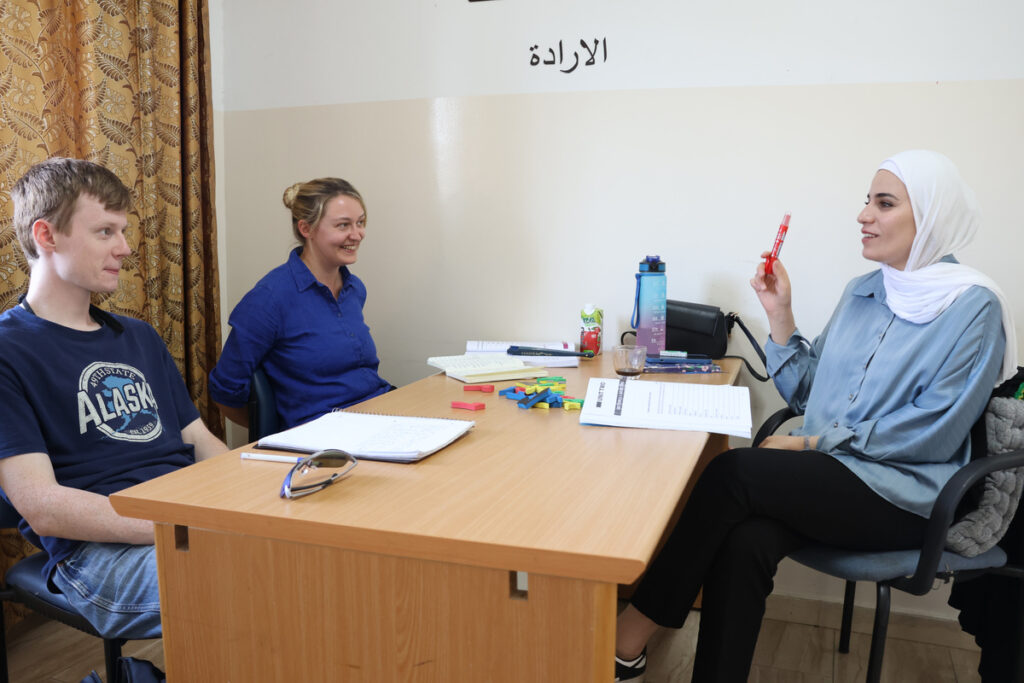
Best Arabic Language Schools in the West Bank: Arabic is one of the world’s most widely spoken languages, an official language of the United Nations, and the language of some of the world’s biggest geopolitical and international affairs issues. Some people might learn Arabic because they are connected to or interested in the Middle East region. Some people study classical Arabic in order to read the Quran. Some might need language skills for their work.
Whatever your reason for learning Arabic, it’s important to look at a few key questions before you start learning: Where am I going to learn, what kind of Arabic should I study, and which language school is best for me? Regarding where to learn, immersion is one of the best ways to pick up a new language. For that reason, studying in the Middle East is a great way to deepen your learning experience. But where in the Middle East? Learning Arabic in Palestine is a great option for several reasons.
First, the dialect is widely understood throughout the Arabic-speaking world. This makes your Arabic skills much more useful in a variety of contexts. Second, language is deeply bound up with culture, and Palestine has an incredibly rich history and culture for you to explore alongside your classes. Finally, Palestine offers some high-quality, affordable language-learning options that make it accessible to learners at all levels.
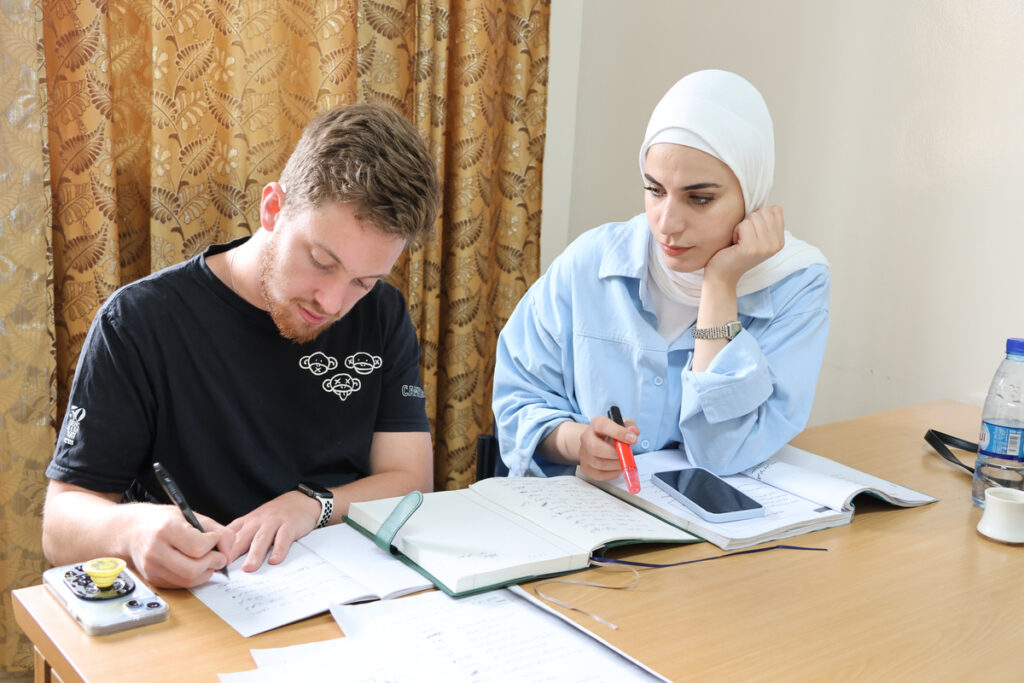
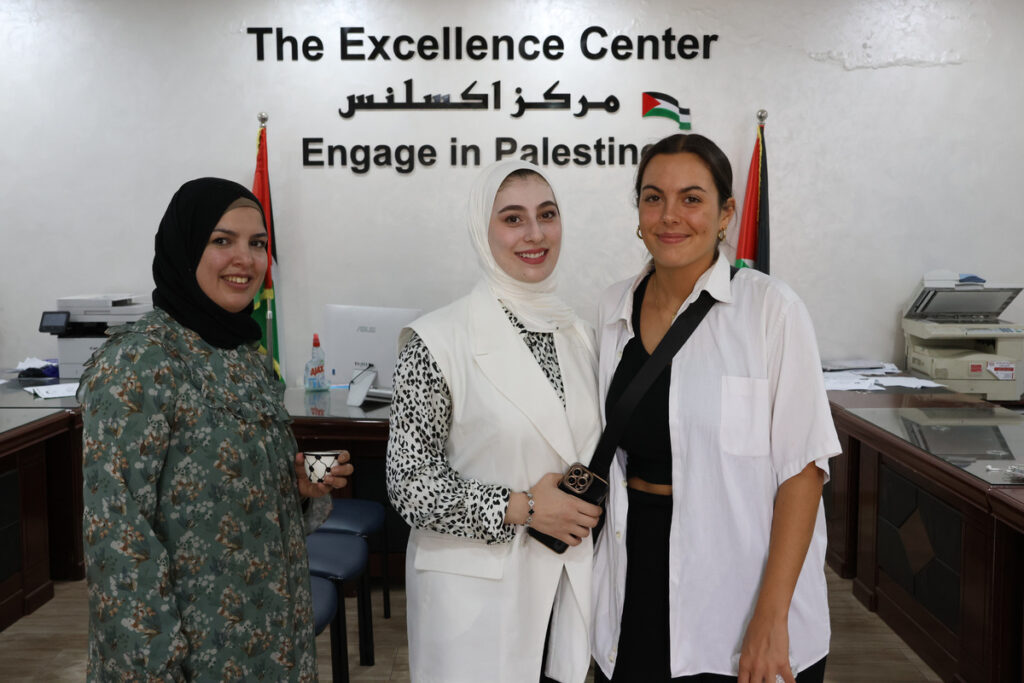
This article will explore some of the best language schools in Palestine to help you make the best choice for your Arabic learning goals!
Table of Contents
Why Learn Arabic in Palestine?
There are many great reasons to study Arabic in Palestine.
First, let’s talk about dialect. Modern Standard Arabic (also called MSA or FusHa) is, as its name suggests, a standard universal Arabic. This is usually used across media, in official documents, and in books. However, MSA is a very formal version of Arabic that is not usually spoken. Speaking MSA has been likened to speaking Shakespearean English – people might understand what you’re trying to say, but it’s not good for everyday conversation. Each area of the Middle East and Northern Africa has its own spoken dialect of Arabic, and these vary in differences and similarities to MSA and each other.
For example, Egyptian Arabic is really different from MSA, but many TV shows and movies come from Egypt, so the dialect is actually quite widely understood. Morocco’s Arabic, however, is almost like a completely different language for most other Arabic speakers. Palestinian Arabic falls under the umbrella of Levantine Arabic, a dialect spoken across Syria, Lebanon, Jordan, and Palestine. This dialect is the closest to MSA, which means that it is widely understood as well as being widely spoken. Learning Palestinian Arabic is the best of all worlds when it comes to selecting a dialect.
Next, let’s talk about immersion. As mentioned above, immersing yourself in a community that speaks the language you want to learn is a sure-fire way to accelerate your learning. Daily exposure to and involvement with spoken language helps to take your learning from off the page (or off the app) and into real life. Learning in Palestine is great for this reason, because there are plenty of people who are curious about international travellers and who would be very happy to practice Arabic with you. Palestine is also a place where language and culture intersect deeply, so involvement in everyday activities will help to build your vocabulary and embed the language even more.
Finally, compared to some Arabic-speaking countries, Palestine has some very affordable and flexible learning programs. These cost-effective options mean that Arabic learning is much more accessible in Palestine. Program flexibility (in length and in intensity) means people can study depending on their needs, not having to fit into a rigid structure that might only take people for a certain number of weeks or at certain times of year.
What Makes a Great Arabic Language School?
Experienced Instructors: Native speakers with formal teaching experience
Teaching a language is no easy feat – there’s a reason why people get qualifications in order to teach a second language. It’s important to make sure the instructors at the school you select are native speakers with an excellent grasp of English themselves, have experience teaching, and especially in teaching Arabic to foreigners. When learning a language, your words can get mixed up, and you might struggle with pronunciation. A good instructor should be able to know what you’re trying to say and help you along the path to speaking well.
Small Class Sizes: Personalized Learning and Interaction
Small class sizes are best when trying to learn a new language, because they allow the teacher to focus on each student’s individual journey. Having small classes means teachers can easily pick up on and correct any mistakes, spend time speaking with each student, and get to know their strengths, weaknesses, and learning needs.
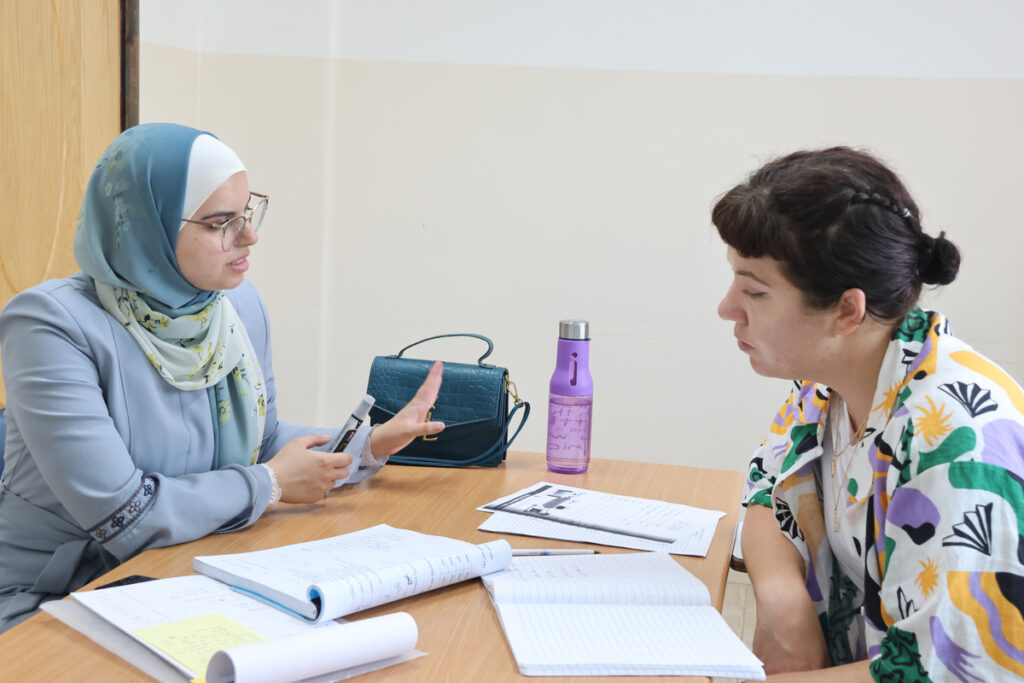
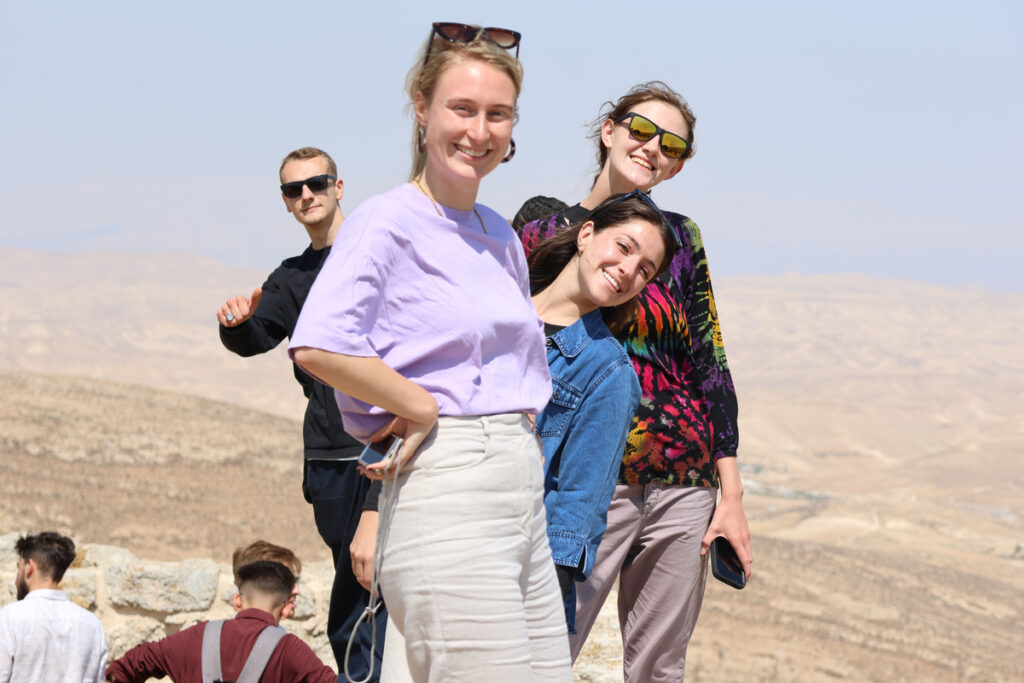
Varied Teaching Methods: Mix of Classroom Learning, Conversation Practice, and Cultural Activities
Great language schools have varied teaching methods because language is never learned in just one way. While classroom learning is essential for memorising grammar and vocabulary, it’s just as important to apply the language in real-life situations. Using tools like conversation practice or going to a coffee shop to order what you want in the local language is a great way to work on your language comprehension. Additionally, engaging in cultural activities is a great way to pick up new words and understand the context of your classes.
Flexible Programs: Options for short-term, intensive, and long-term courses.’
Language schools with flexible programming are much more accessible to a wider audience. Look for a school that can work around your attendance needs, like the duration of your course or the time of year that you are available to study. A good language school should also offer courses that cater to levels from beginner onwards and that vary in intensity.
The Best Arabic Language Schools in Palestine
1. Volunteer in Palestine
About
Volunteer in Palestine was founded by dedicated local community servants to create a bridge between Palestine and the world.
They offer educational, cultural, social, and community programs to a diverse range of international students, interns, and volunteers. With a wide variety of topics to choose from, Volunteer in Palestine has something for everyone interested in learning about and experiencing life in Palestine.
Since they began in 2011, Volunteer in Palestine has provided a rich and immersive learning experience for over 1000 international visitors, with great benefits to the local community, including children, Palestinian refugees, youth, and women.
Courses Offered
Palestinian Arabic, Modern Standard Arabic, and Levantine Arabic from beginner onwards.
Summer Arabic Immersion Program
Available in person or online
Nonintensive, intensive, or super-intensive courses are offered.
Teaching Methodology
Small classes, conversation practice, immersive approach, cultural integration, and practical application.
Is academic credit offered?
Yes
Accommodation
Modern apartments or home-stays located close to the Volunteer in Palestine campus. Private rooms or private accommodation can be organized on request.
2. Birzeit University
About
Birzeit University strives to promote excellence in higher education by providing quality academic teaching, training, research, and relevant community programs within the context of sustainable development, emphasizing social conscience and democratic values in a free, civil Palestinian society.
Courses Offered
Modern Standard Arabic I-IV
Colloquial Arabic I-IV
Social and Political Science Courses
Is academic credit offered?
Yes
Teaching Methodology
Arabic classes are taught alongside social sciences classes
Field trips and cultural immersion
Accommodation
Shared or single accommodation. The University can help students find housing, or students may find their own housing.
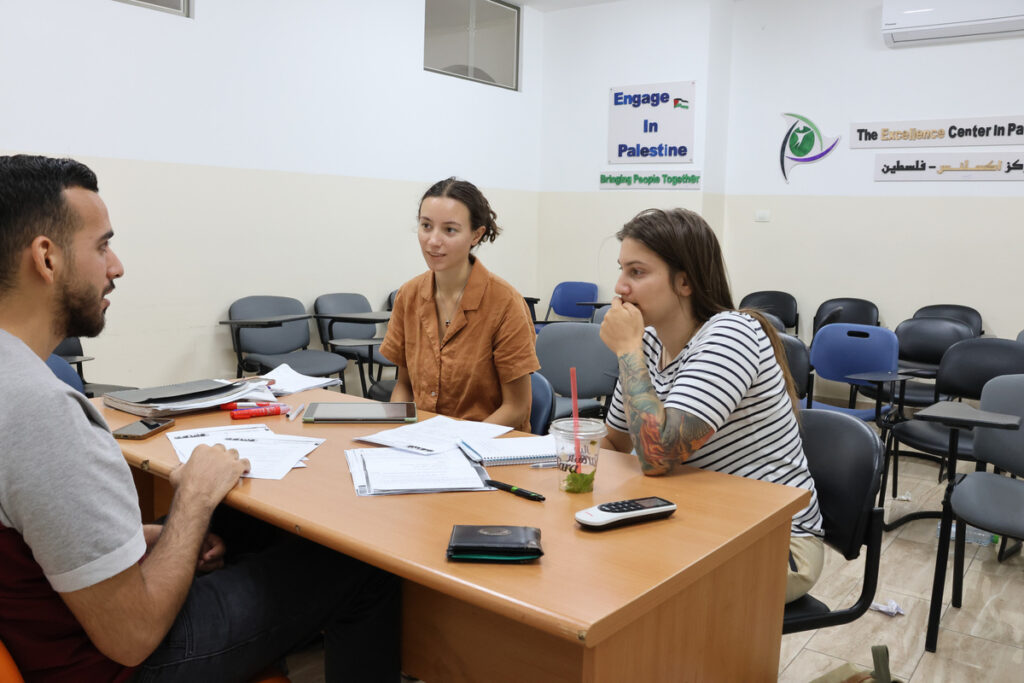
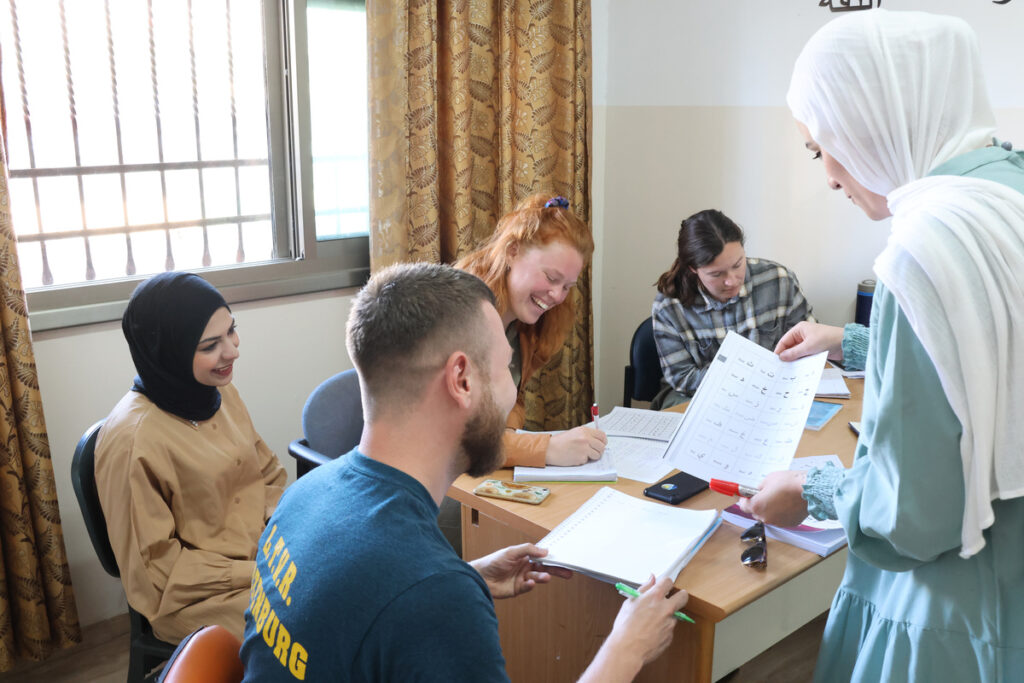
3. Bethlehem University
About
The Arabic School for Foreigners at Bethlehem University has been a popular choice for students for the past 18 years. Their programs utilize special methodologies, and their course materials are designed by professors who are experts in teaching Arabic, particularly to nonnative speakers. Their teachers are well-trained and qualified to teach both colloquial and classical Arabic to foreign students.
Courses Offered
Spoken Arabic
Modern Standard Arabic
Media Arabic
Is academic credit offered?
Yes
Teaching methodology
Flexible learning, group or individual learning options
Accommodation
Student accommodation, or students can find their own accommodation in Bethlehem
Additional Benefits of Studying in Palestine
Exploring Palestinian Cities
There’s more than just your chosen language school in Palestine! Studying in the West Bank means you will have access to some of the most beautiful, historical, and religiously significant places in the world. Whether you’re based in Hebron in the south or Nablus in the north, there are plenty of opportunities to travel to cities like cosmopolitan Ramallah, ancient Bethlehem, or classic Nablus. Getting around Palestine isn’t very difficult – there are shared taxis called Services (Servees) that go between cities and are usually quite affordable to use.
Cultural Activities
Studying in Palestine also means exposure to Palestine’s rich culture. Food is one of the big cornerstones of life here, so you will likely experience (and learn to make!) a lot of traditional dishes like maqlooba, kunefe, and a delicious local drink called sahlab. You will run into something old and significant wherever you go in Palestine. Tours around cities such as Hebron, Bethlehem, and Jerusalem will immerse you in the vast histories of these places and help you understand some of the current context.
Networking & Community
While studying in Palestine, you will undoubtedly make new networks and friendships with various people. Local people are incredibly friendly and will want to speak to you about where you come from and why you have come to stay in Palestine. They will also have incredible stories to share about life under occupation. Your fellow students at whichever language school you choose will undoubtedly become a strong social foundation for you, whether it’s doing homework together, travelling to different cities, or finding a favourite local cafe.
List of Best Arabic Language Programs in Palestine
The Study Arabic programs provide 20 hours of instruction each week, allowing students to enhance their Arabic skills rapidly and complete an extensive 80-hour course in just four weeks. Below is a list of the seven Arabic study programs available in Palestine.
1. Intensive Arabic Language Courses
Arabic Courses in Palestine: For anyone interested in learning Modern Standard Arabic, Palestinian Arabic (Ammiyya), Levantine (Shami), or an Arabic dialect in Israel, Palestine, or the Middle East in general, Study Palestinian Arabic School provides super-intensive, intensive, and non-intensive Arabic language immersion courses for international students of all ages and abilities.
Since 2011, we have welcomed graduates, professionals, and retired people seeking to come live and learn among Palestinians in the city of Hebron, West Bank, Palestine. Our Intensive Arabic language programs are for all levels of Arabic language studies: first-time learners, beginners, intermediate-level speakers, and advanced learners.
2. Intensive Summer Arabic Program in Palestine
Summer Intensive Arabic Program provides an excellent opportunity for those interested in intensive Levantine Arabic or Ammiyya Arabic courses (اللهجة الشامية او العامية) across a variety of Middle Eastern regions, including the West Bank, Palestine, Jordan, Lebanon, Syria, Israel, and the broader Middle East. Recognized as one of the leading Arabic language schools in Palestine, we are dedicated to offering high-quality Arabic learning experiences that allow you to immerse yourself in both the language and the rich culture of the region.
Our Summer Intensive Arabic program provides a range of options for Arabic dialects and intensity during the summer. You can choose between super-intensive and intensive Arabic programs, and we cover a variety of dialects, including Levantine (Ammiya), Palestinian colloquial Arabic, and Modern Standard Arabic.
3. Study Levantine Colloquial Arabic Program
The Levantine Arabic Program offered by Study Palestinian Arabic School is a unique opportunity for anyone looking to expand their spoken Arabic to include the Levantine dialect, travel through the Levant, and immerse themselves in Levantine culture, history, and politics. Fortunately, for those looking to study Arabic with us, we are located in the West Bank, Palestine, in the heart of the Levant, and the busy and vibrant city of Hebron. Levantine Arabic is one of the most widely spoken Arabic dialects, making its acquisition the ultimate passport to the Arabic-speaking world.
The Arabic courses offered by Study Palestinian Arabic School focus on daily colloquial tasks, meaning students will learn everyday phrases and real-world skills. Students will learn how to write and speak using Levantine phonetics, and improve their reading and listening comprehension. Depending on the course level, the program will also focus on various topics designed explicitly for conversation. The experience is immersive and includes interactions with the city of Hebron, as well as the possibility of staying with a host family.
4. Study Palestinian Colloquial Arabic Program
Study Palestinian Colloquial Arabic: The Study Palestinian Arabic Immersion Program is a great opportunity for those wishing to learn the Palestinian dialect of Arabic, connect with the wider Palestinian diaspora, and immerse themselves in the diverse culture of Palestine and the greater Levant.
Study Palestinian Arabic School offers courses at four different levels and three different intensities, depending on your needs. Our Palestinian Colloquial Arabic immersion program is also ideal for those who would like to learn about this region’s rich history and culture or who wish to understand Palestine’s contemporary situation better. Another benefit of this program is that it is also a good opportunity for building relationships. Students may also get to reside with a Palestinian host family for a fuller immersion into the culture and life of Palestinians.
5. Study Modern Standard Arabic Program
Study Modern Standard Arabic Program: Study Palestinian Arabic School offers Super Intensive, Intensive, and Non-Intensive Modern Standard Arabic (MSA) courses across six levels, from absolute beginner to advanced. MSA is the international standard for Arabic and is highly useful for international communication and a strong foundation before moving on to a chosen dialect.
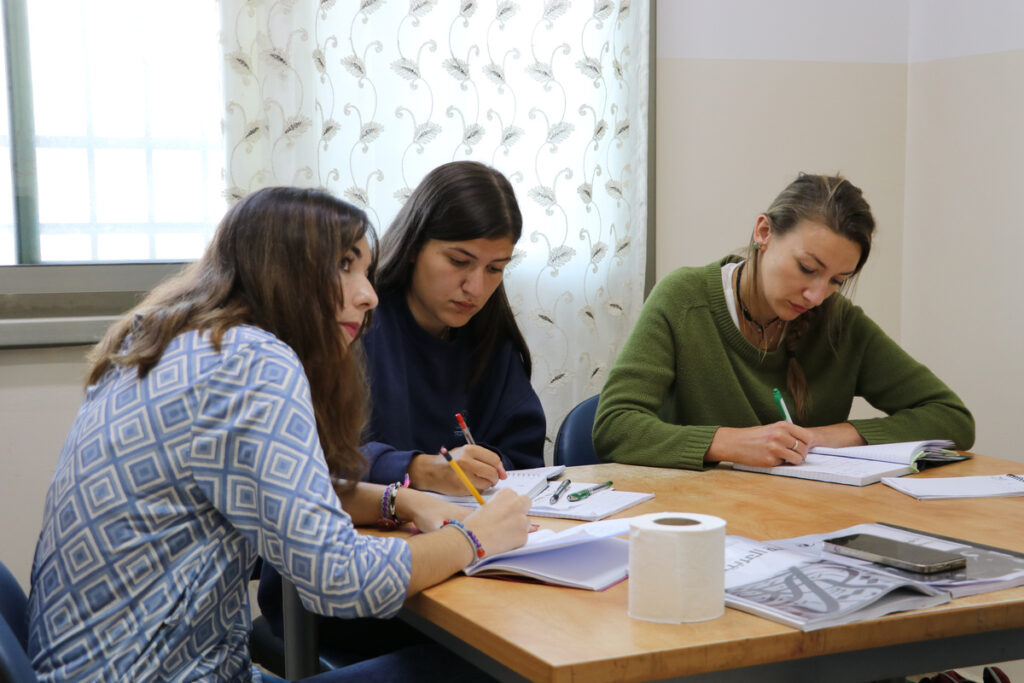
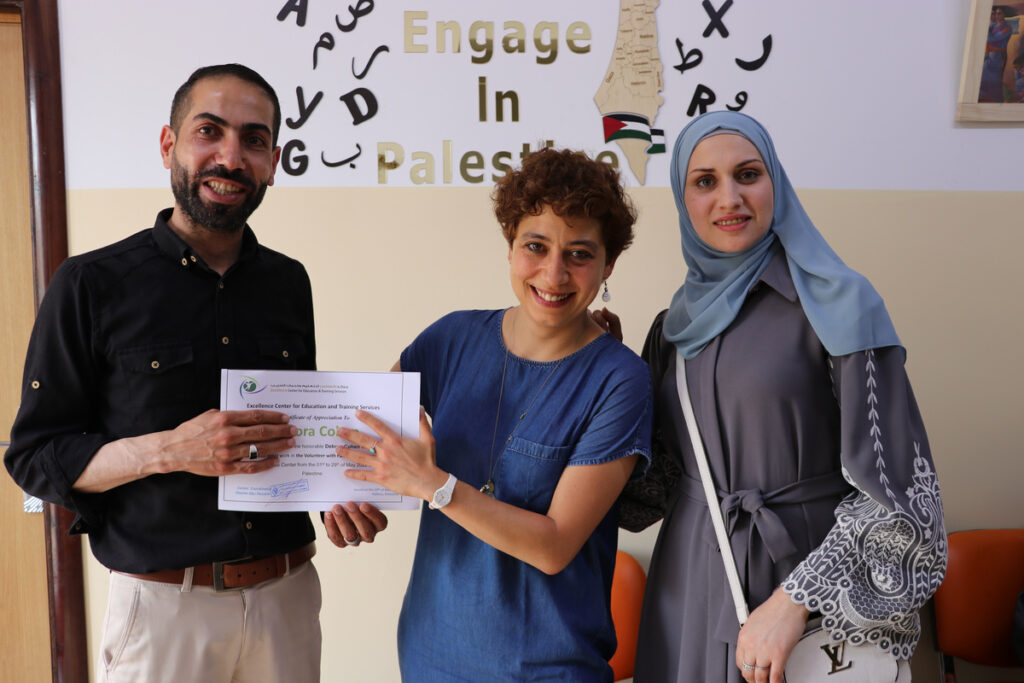
Study Palestinian Arabic School’s Modern Standard Arabic program provides students at every level with a comprehensive and personalized journey into Modern Arabic. They will learn all about its formulaic sentence structure, its expressive vocabulary, and artistic script from qualified, native-speaking teachers in the heart of the Levant and Middle East.
It is often said that language is a reflection of culture, and while generalizations of language and nationality can be tenuous in their value, MSA does, in fact, speak to the dramatic and vibrant heart of the diverse Arab world.
6. One-On-One Private Arabic Courses
One-on-One Private Arabic Courses (Online & In-Person): Study Palestinian Arabic School offers personalized, one-on-one Arabic lessons in Palestinian Arabic, Levantine dialect (Levantine Arabic, also called Shami (autonym: شامي šāmi or اللهجة الشامية el-lahje š-šāmiyye), Modern Standard Arabic, and Ammiyya Arabic, available both online and in-person. These private courses are perfect for students who prefer or require the focused attention of an instructor to support their language acquisition.
Our tailored approach allows us to adapt teaching methods and materials to meet the specific needs of each student, ensuring an effective and engaging learning experience. Our in-person classes offer students the opportunity to study Arabic for 4-6 hours a day, 5 days a week, providing an immersive and dynamic learning experience.
7. Study Arabic Online Program
Learn Arabic Online: Study Palestinian Arabic School offers high-quality Modern Standard Arabic (MSA), Colloquial Levantine Arabic (Shami), and Colloquial Palestinian Arabic (Ammiya) classes online. These classes are offered with the same personalisation and techniques used in our very own classrooms.
Our Online Arabic courses are suitable for those ranging from beginner to advanced. Our qualified Arabic teachers will help you maximize your progress in a short period with personalised one-to-one lessons that focus on all four areas of successful language learning: listening, speaking, reading, and writing.
How to Apply & Practical Tips
Application Process: How to Get Started?
First, check the eligibility requirements to make sure you are able to apply for your chosen program. Then, check the application steps. Do they require any proof of prior learning? Do you need to write any kind of application letter? Once you know if you can apply, follow the steps on the school website or email them for more information about how to apply.
Visa & Travel Information: What international students need to know
Once you have been accepted into your chosen program, it’s time to start planning your trip to Palestine! The first thing to know is that there is no separate visa to enter Palestine – you will need to get a tourist visa from Israel on arrival. We have some tips on traveling from Jordan to Palestine to help you with the process. As of January 1st, 2025, anyone traveling to Palestine needs to fill out an Electronic Travel Authorization form prior to departure.
Budget & Cost of Living: Tuition fees, accommodation, and daily expenses
The next big thing to think about is budgeting for your study. Things to consider are tuition fees, accommodation, travel costs, and daily expenses. At some schools, like Study Palestinian Arabic School, tuition fees are inclusive of accommodation and breakfast. Choosing a program like this can significantly reduce your costs. The currency in Palestine is the New Israeli Shekel. You can use a currency converter tool to see the rate and check websites like Numbeo to get a sense of the current cost of living for everyday expenses.
Safety & Local Etiquette: Tips for Travelers in Palestine
Contrary to what you might hear in the news, life for internationals in Palestine is incredibly safe. Getting into the country can be a little bit difficult at times, as Israeli border security can be very strict depending on the security situation. Our best advice is not to mention Palestine or the West Bank or learning Arabic, and instead talk about doing tourism in Israel. Once you are across the border, traveling to your destination is easy.
Best Arabic Language Schools in the West Bank – Conclusion
Whatever your reason for learning Arabic, studying in Palestine is a great way to reach your language goals. Schools in Palestine provide a great opportunity for immersive learning, a cultural experience, and the opportunity to use your Arabic skills daily with the many friends you’ll meet along the way.
At Study Palestinian Arabic School, we welcome you with open arms as you look to take the next step in your Arabic journey. Check out our Arabic programs online, or simply email us for more information or to express interest in studying Arabic with us in Hebron.
Find Us Online
Do you have questions for us regarding the Best Arabic Language Schools in Palestine or about one of our programs? Contact us via:
Email: info@ecpalestine.org
WhatsApp: +972 599 479 880
Website: https://volunteerinpalestine.org/
EC Website: https://excellencenter.org/
Instagram: https://www.instagram.com/excellence.center
Facebook page: https://www.facebook.com/ExcellenceCenter
Facebook account: https://www.facebook.com/RafatECHebron
Watch us on YouTube: https://www.youtube.com/channel/UCsQSLdFZWZcBm6Uj0XMYuKg
Visit and Explore Palestine: https://www.facebook.com/ExplorePalestine
